Diamonds Across Generations: Indian Bridal Jewellery Traditions Reimagined for the Modern Bride
In India, jewellery has never been merely decorative. It is documentation of lineage, of love, of cultural identity. The jewellery a bride wears on her...

In India, jewellery has never been merely decorative. It is documentation of lineage, of love, of cultural identity. The jewellery a bride wears on her wedding day carries centuries of meaning. And yet the modern Indian bride is writing her own story within that tradition. Here is how natural diamonds are becoming the bridge between heritage and now.
The Significance of Bridal Jewellery in India
Across Indian communities from Gujarati to Tamil, Punjabi to Bengali, the bridal jewellery tradition differs in form but not in spirit. These are pieces chosen with care, gifted with love, and worn with the understanding that they will outlast the ceremony itself. The maang tikka, the nath, the mangalsutra, the haath phool: each piece carries ritual significance that goes far beyond aesthetics.
Where Diamonds Enter the Story
Natural diamonds have been woven into Indian bridal tradition for centuries, historically reserved for royalty, now accessible to brides who want their jewellery to hold the same permanence and brilliance. A diamond maang tikka in lieu of a heavily polki piece. A solitaire as a second ring in the saat phere ceremony. And the mangalsutra, perhaps the most intimate piece a bride will ever wear, reimagined for the modern woman.
The Zen Kismet collection was built around exactly this idea. A contemporary rethinking of the mangalsutra, Kismet brings natural diamonds into a silhouette that honours the tradition while speaking the language of today. Sleek enough to wear every day, significant enough to carry the weight of the moment it marks. A diamond mangalsutra that replaces the traditional design with pavé-set brilliants is not a departure from tradition. It is an evolution of it.
Building a Bridal Set at Zen Diamond
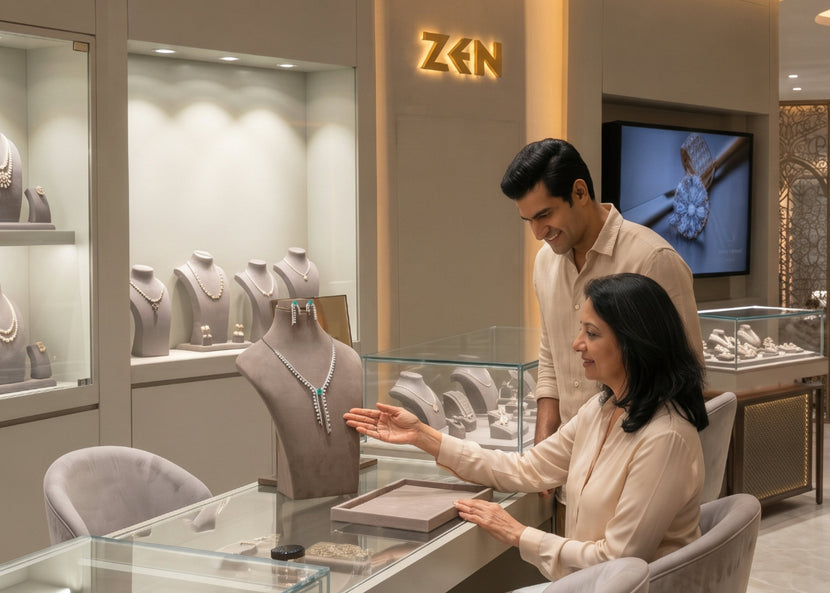
Our bridal consultation service helps you build a cohesive set of pieces that honour your cultural background while reflecting who you are today. We work with brides across Maharashtra, Gujarat, South India, and beyond each set custom-calibrated to the rituals, the outfits, and the intention behind each piece. A piece that works at the mandap must also be a piece you will reach for on your anniversary, your child's naming ceremony, and the ordinary Tuesday when you want to feel like yourself.
The Heirloom Question
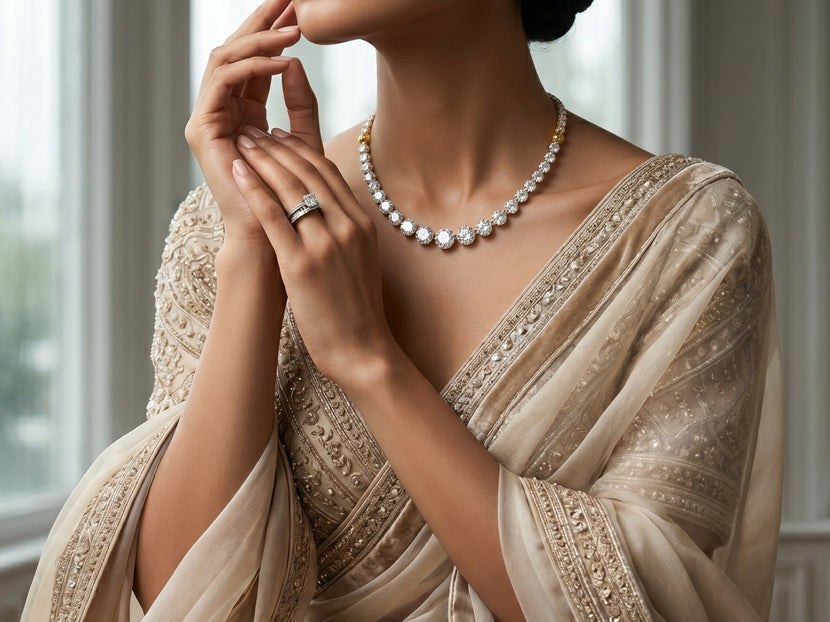
Every bride is, in some sense, buying for two generations: herself and the daughter or daughter-in-law she may one day gift these pieces to. This is why the classics matter. A solitaire necklace worn to the reception today becomes the piece her daughter reaches for on her own wedding morning. A tennis bracelet stacked with bangles at the sangeet is the same bracelet that will sit on a dressing table decades from now, just as beautiful, just as relevant. Diamond stud earrings, the quiet anchor of every trousseau, never go out of style because they were never in style to begin with. They simply are.
These are the pieces that form the foundation of a bridal jewellery wardrobe at Zen Diamond: the Zen Pirlanta solitaire necklaces, the diamond tennis bracelets, the solitaire and halo stud earrings. Chosen not just for the wedding week, but for every milestone that follows. A dinner anniversary. A daughter's graduation. A quiet Tuesday when you want to feel like yourself.
Natural diamonds are the ideal heirloom material, chemically inert, structurally the hardest material on earth, and eternally beautiful regardless of which decade they are worn in. When you choose a natural diamond piece from Zen Diamond India, you are not buying jewellery. You are beginning a legacy.
“The finest bridal jewellery is not just worn on the wedding day. It is worn on every important day that follows.”
Bridal Jewellery · Indian Traditions · Heritage · Heirloom